

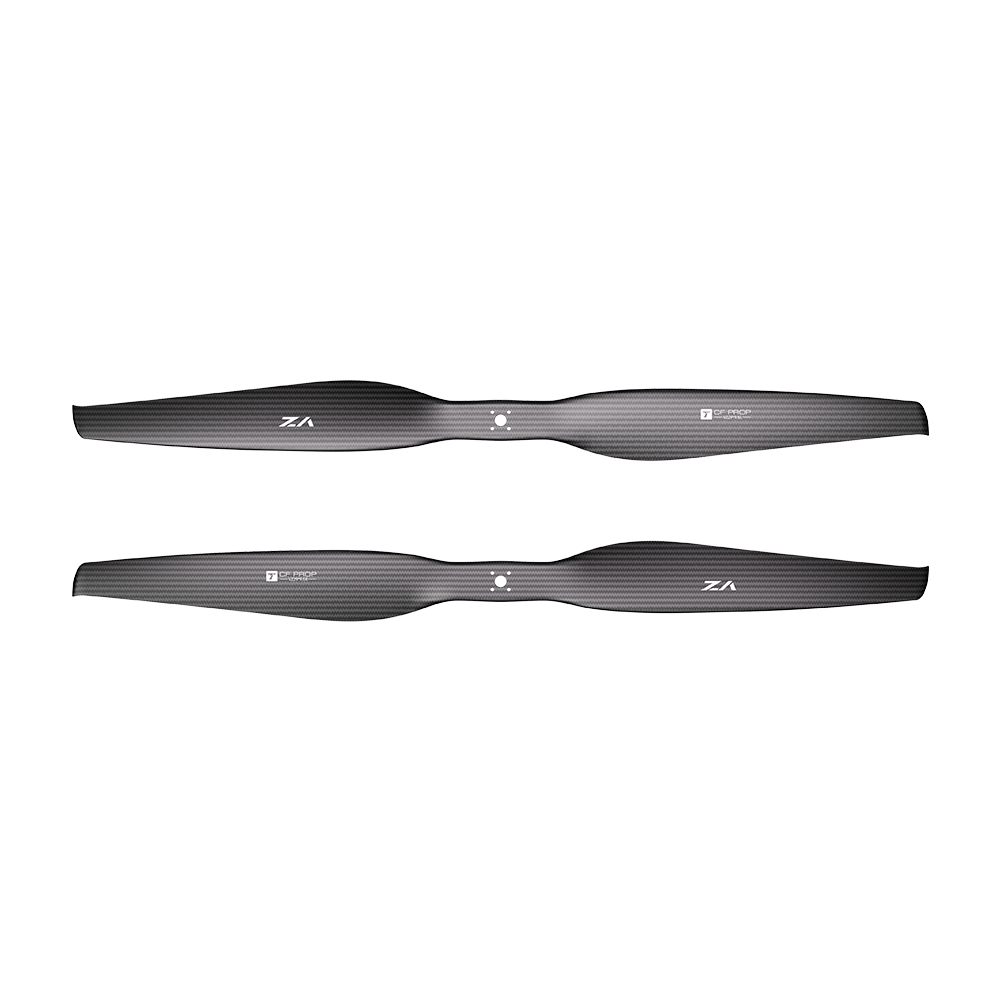

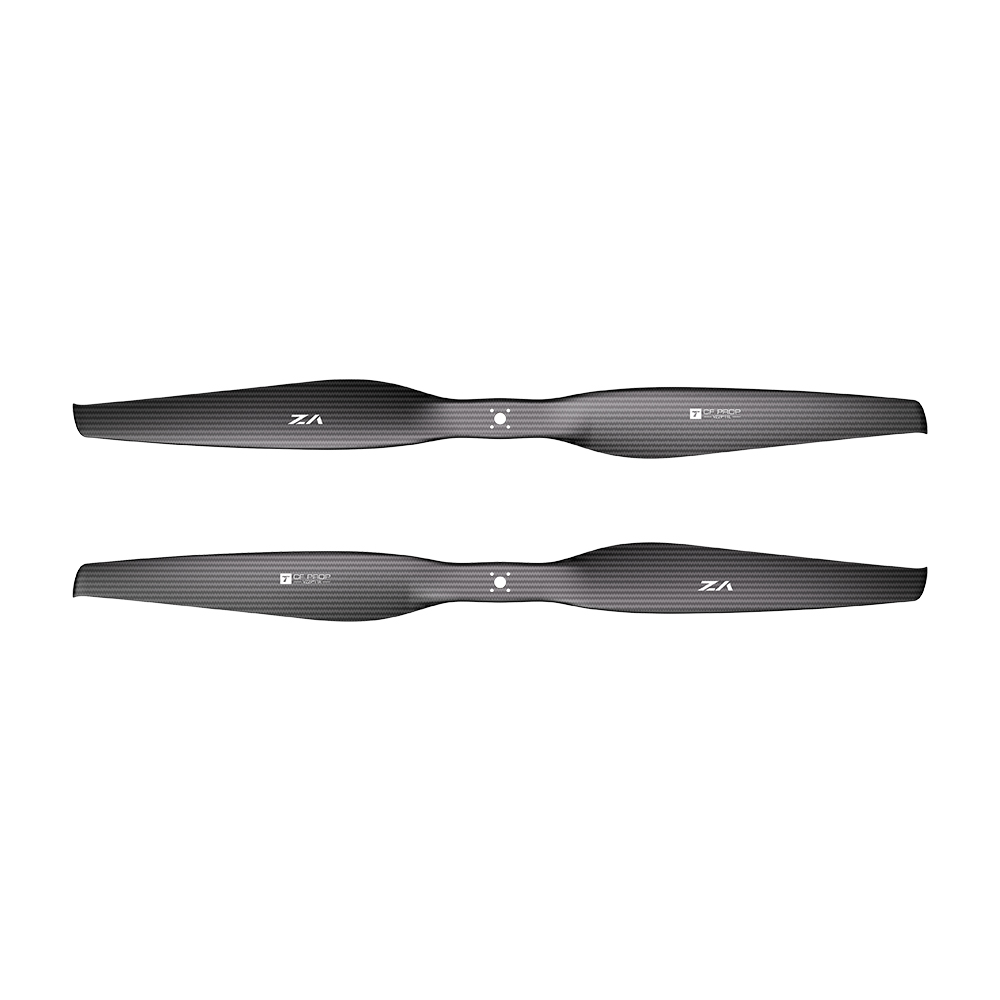
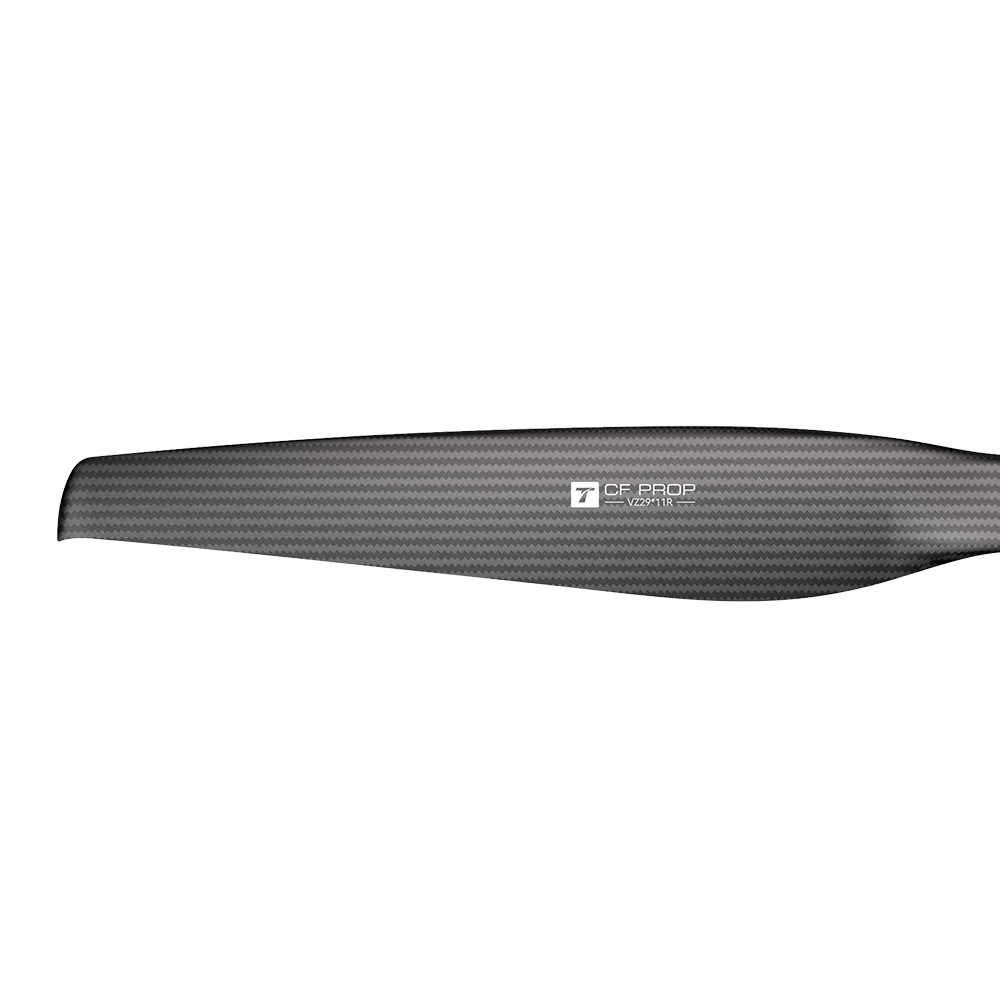
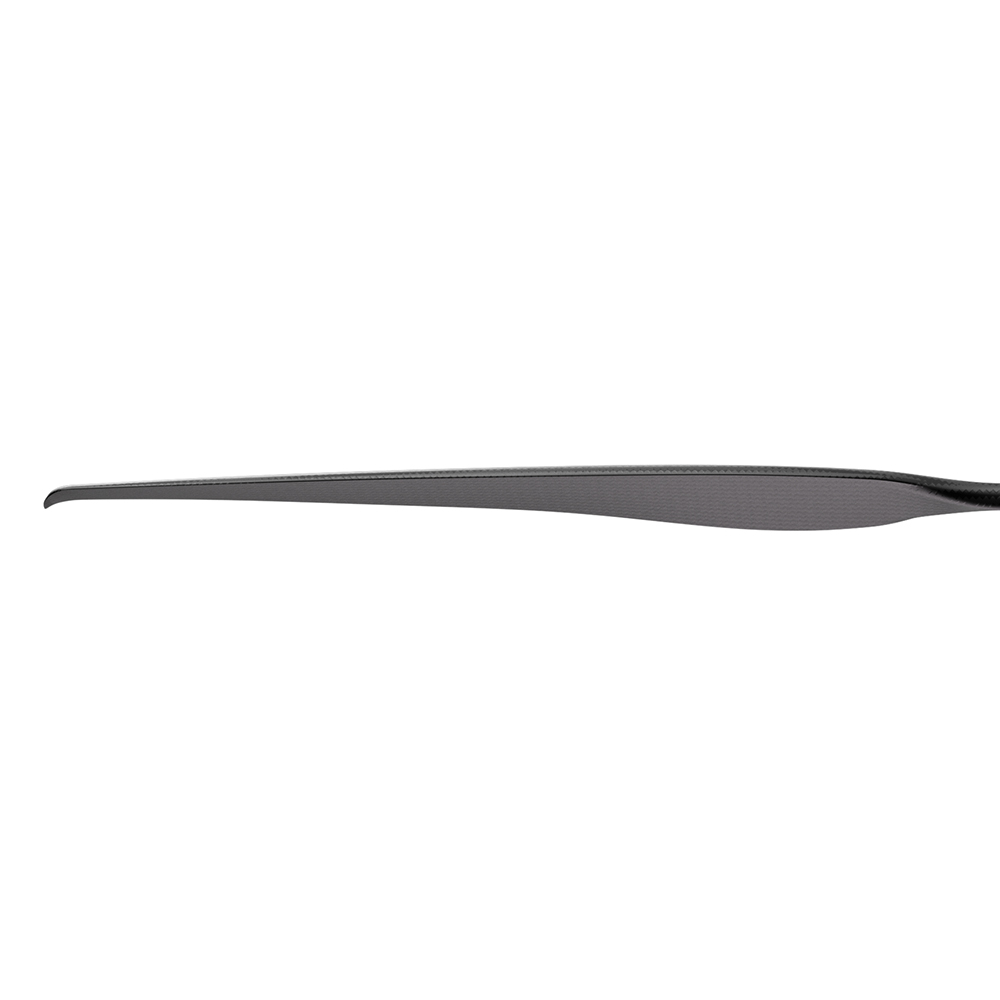
VZ29x11 29″ Matte PMI Carbon Propeller for Heavy VTOL Cargo
$279.90
T-MOTOR VZ29x11, PMI Carbon Fiber, +30% bending & +20% stiffness, 89g unit weight, 36kg max thrust, for heavy VTOL. Rec:VL1028+KV190+V200A
Description
Detail Information
T-MOTOR VZ29x11, PMI Carbon Fiber, +30% bending & +20% stiffness, 89g unit weight, 36kg max thrust, for heavy VTOL. Rec:VL1028+KV190+V200A

VZ SERIES – VTOL PROPELLERS
Break through the performance limitations of traditional multi-rotor propellers.
VZ series propellers deliver superior power, durability, and lightweight
design for VTOL applications
What Does a VTOL Propeller Need?
High Strength
High Stiffness &
Lightweight Design

High Strength
Withstands immense centrifugal
loads and maneuver-induced
alternating loads at high RPM,
preventing structural failure

High Stiffness
Ensures safe blade-tip clearance
in compact layouts, suppresses
aeroelastic deformation,
and prevents flutter

Lightweight Design
Reduce the moment of inertia
to achieve rapid thrust response
and higher attitude control
bandwidth for the flight control
system
Superior Aerodynamic Design
The unique dual operational modes
of VTOL—vertical takeoff/landing and
cruise—demand new propeller capabilities

Vertical Takeoff & Landing Phase
Requiring high thrust and
power, demanding maximum
lift output from the propeller
disk within a limited blade area

Cruise Phase
When the propeller stops
rotating, it is necessary to
minimize profile drag to reduce
power consumption, achieving
"stealthy" low-drag efficiency
Transition Stability: Resisting Complex Flow Field Interference
The extreme challenges posed by high angle of attack, low speed and unsteady flow field,
coupled with the insufficient strength and poor transition stability of traditional blades,
make this an accident-prone region

Unsteady Flow Fields at High Angle of Attack
The aircraft operates at high angles
of attack and low speeds within an
extremely complex flow environment


Asymmetric Airflow
Significant angle between incoming flow
and the rotation axis causes asymmetric
airflow entering the propeller disc

Severe Periodic Variations
Local forces on the blade fluctuate drastically
per rotation, inducing flutter and causing
significant thrust fluctuation
To address the challenges
of traditional propellers in VTOL (Vertical
Takeoff and Landing mode) applications
we introduce the VZ Series Propellers
Technical Features of the VZ Series Propellers
Advanced composite materials and exceptional aerodynamic design work in synergy to ensure consistently
efficient,
reliable, and controllable power output

Bending & Torsion
Resistant Layup Design
Optimized fiber orientation and
ratio maximize strength and stiffness
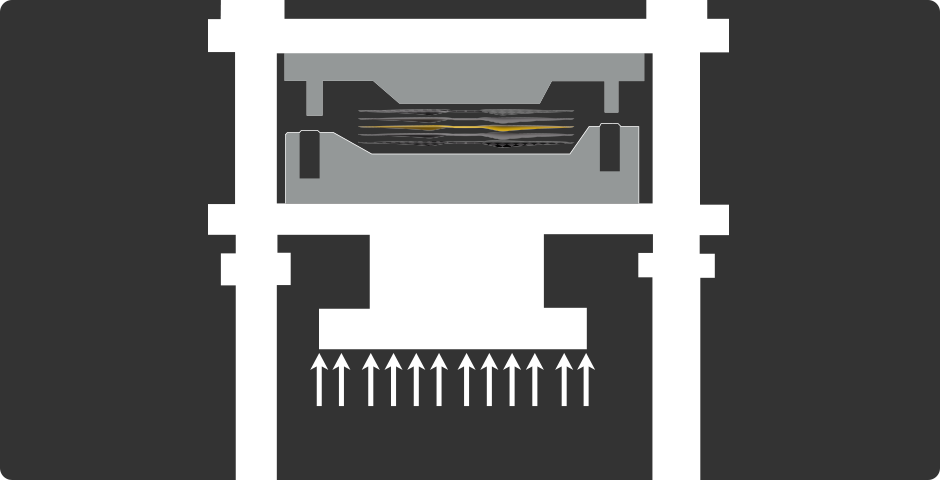
Prepreg Compression Molding
for Integrated Forming
Product porosity below 1%, ensuring stable and reliable quality

PMI Foam Core
Lightweight, high-strength core material
effectively increases stiffness while controlling
total weight
30%
Flexural Strength
Significantly enhanced impact resistance
and deformation resistance for greater durability
in complex operating conditions
20%
Torsional Stiffness
Optimized power transmission efficiency reduces energy loss during operation
Blade Root Optimization: Safety Redundancy Design
The blade root thickness is optimized to provide structural redundancy while reducing loads on the connecting
bolts
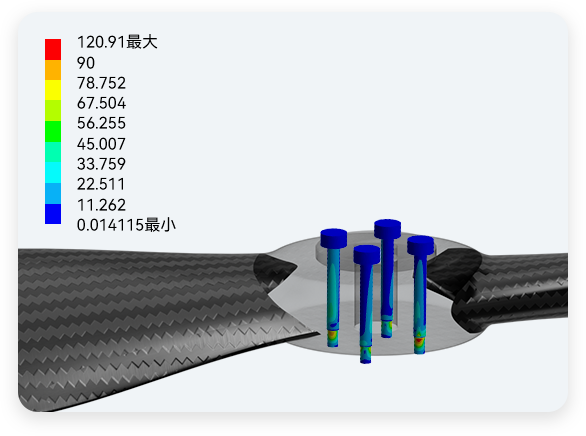
V30 Propeller
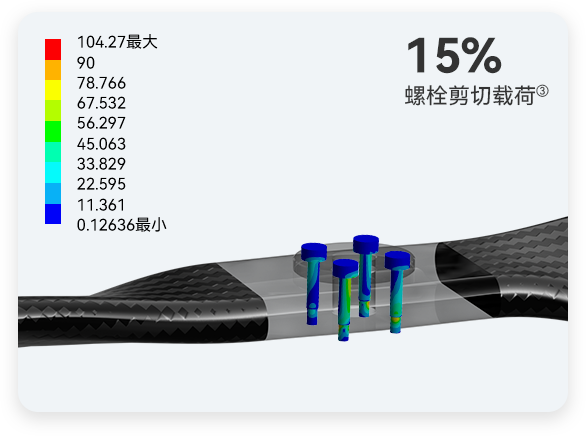
VZ30 Propeller
Aerodynamic Priority: Engineered for High VTOL Thrust
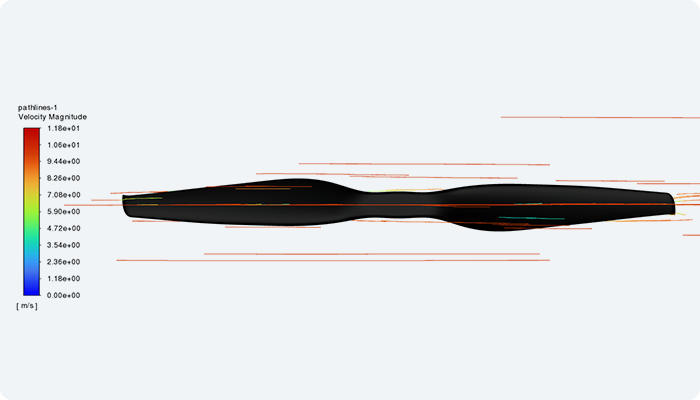
Dedicated High Lift-to-
Drag Ratio Airfoil
Optimized for VTOL conditions to enhance
maximum lift coefficient
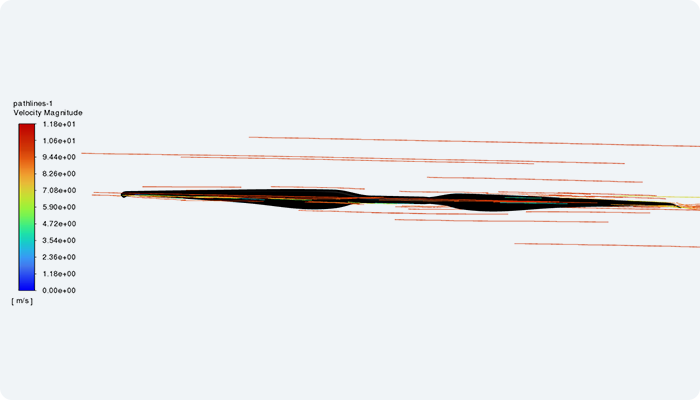
Low-Drag Cruise Blade Shape
Improved aerodynamic blade boundaries
reduce cruise drag

Specialized Blade Tip
Optimized tip design weakens vortex strength
and enhances flight quality
Custom VTOL Propeller
Service: 10 to 100 Inches
Supports precise matching with various
pitch specifications and motors
Full in-house R&D ensures stable and
controllable quality


Aerodynamic/Structural Design


Mold Manufacturing


Composite Molding
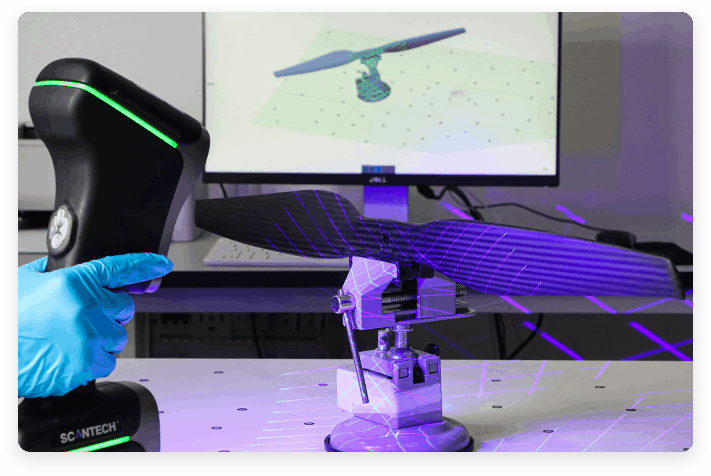

Testing & Validation
① The appearance diagrams and product renderings in this
document are for reference only; the actual product shall
prevail.
② Data regarding improvements in flexural strength and
torsional stiffness are derived from comparative testing
between the VZ Series propeller and the G Series propellers.
③ Data regarding the reduction in bolt shear load is sourced
from simulation comparisons between the installation bolts
for the VZ Series propellers and those for the V Series
propellers.
④ The test data presented above were obtained under
specific conditions, using equipment within our company's
laboratory. Actual data and parameters may vary slightly
depending on the test environment, platform, software,
and other factors.
Specifications
| Parameter | Value |
|---|---|
| Diameter (Inch) | 29(736.6mm) |
| Material | Resin-basedCarbonFiberComposite+PMIFoamCore |
| Pitch (Inch) | 11(279.4mm) |
| Surface Treatment | Matte |
| AverageSingleblade Weight (g) | 89 |
| Type | One-Piece Straight Propeller |
| RecommendedMax RPM(RPM) | 5800 |
| Application | VTOL Fixed-Wing UAVs, Multicopter Mode |
| RecommendedMax Thrust (kg) | 28.8 |
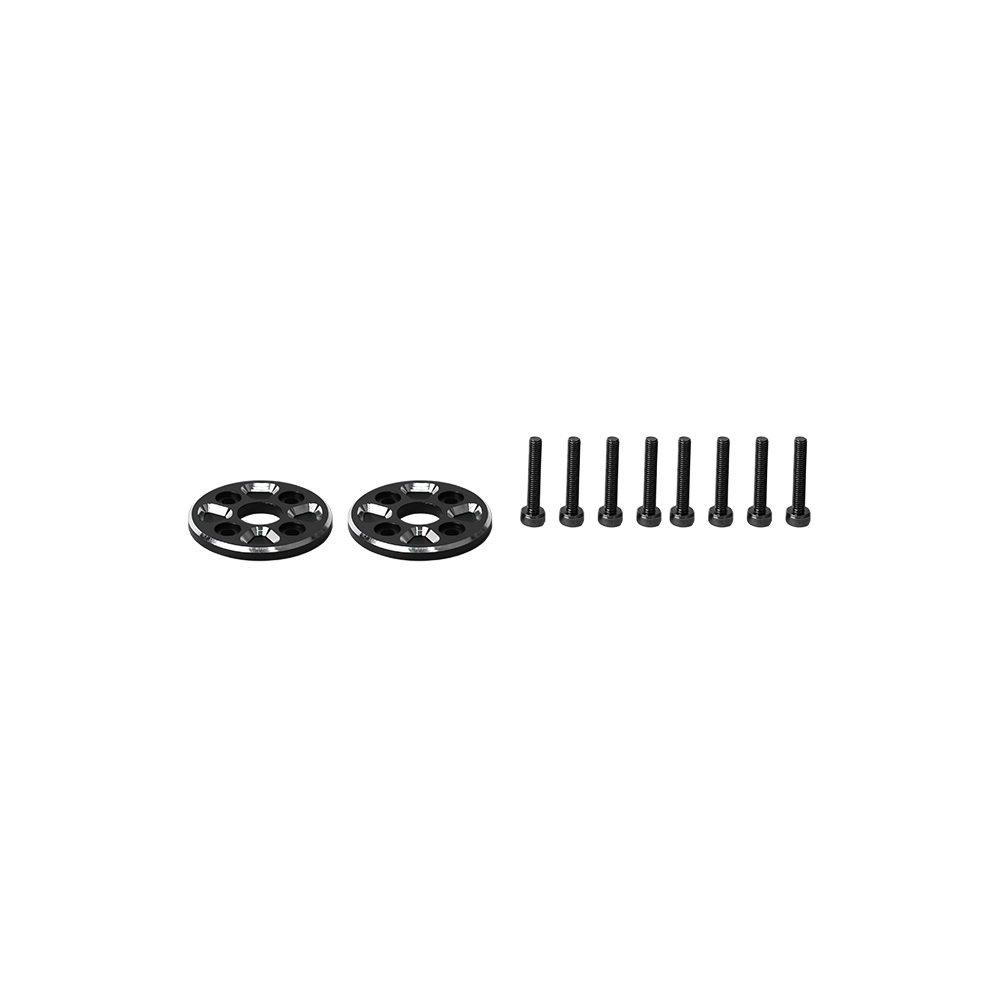
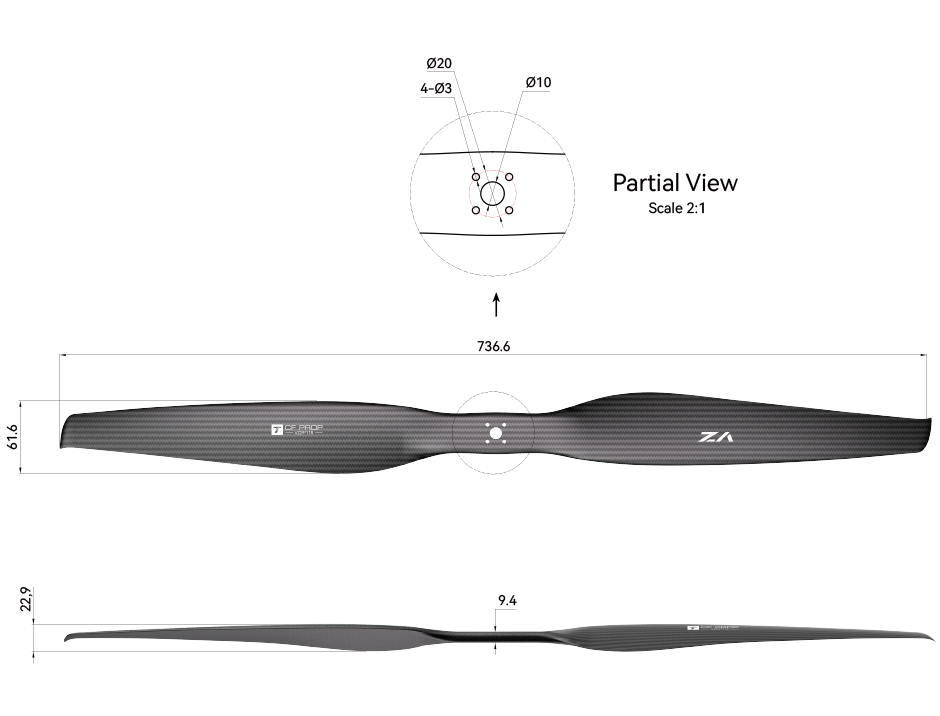
| Connections & Dimensions | Flange Mount, Ø10 mm Center Hole, Ø20 mm Bolt Circle, with 4x Ø3 mm Mounting Holes |
| Limit RPM (RPM) | 6400 |
| Recommendations | Recommended Solution:VL8022 KV170+V150A/VL1028 KV190+V200A |
| Limit Thrust (kg) | 36 |
Technical Drawing
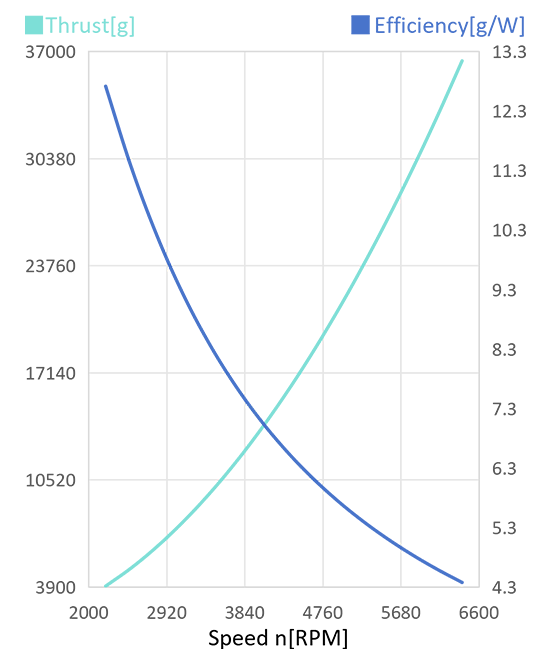
Test Data
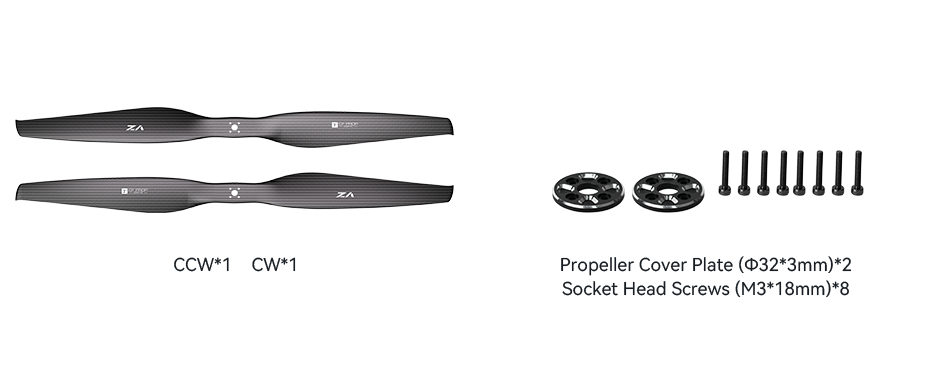
Packing List


Reviews
There are no reviews yet.